
Resources · Packaging
Shatterproof packaging: why we recommend NakPack cartons
The right packaging is what separates an intact delivery from a claim. Here is our advice.
Why packaging matters
The major international carriers (FedEx, DHL, UPS) impose strict standards for liquids in glass bottles. Non-compliant packaging can lead to the parcel being refused at pickup, insurance coverage being voided in the event of damage, and contractual penalties.
Packaging protects the bottle, but also the shipper's image. A damaged parcel, a deteriorated label, or a poorly presented delivery harms the recipient's experience, even when the wine arrives intact. For premium wines, packaging is an integral part of the service.
NakPack, the industry's reference packaging
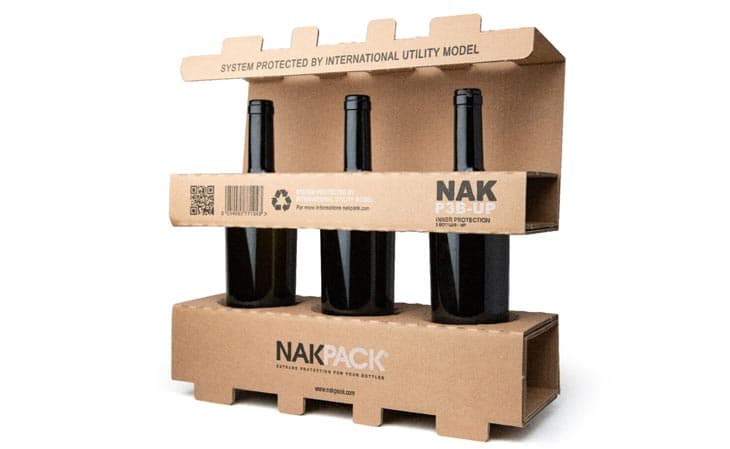
For our shipments we chose NakPack, a system designed by an Italian manufacturer specialising in bottle transport. The principle: hold each bottle individually at its critical points to absorb shocks and vibrations, without oversizing the parcel.
It is not a reinforced carton but packaging made specifically for wine bottles, and tested with the main national and international carriers.
The key figure
0.003% breakage
That is 1 bottle in 33,000.
- Maximum safety : 727 drop tests carried out by the R&D teams and more than 25 million bottles shipped since the company was founded.
- Eco-friendly : Board made of 80% recycled fibres, without synthetic glues, certified Plastic Free and recyclable at level A of the Aticelca system.
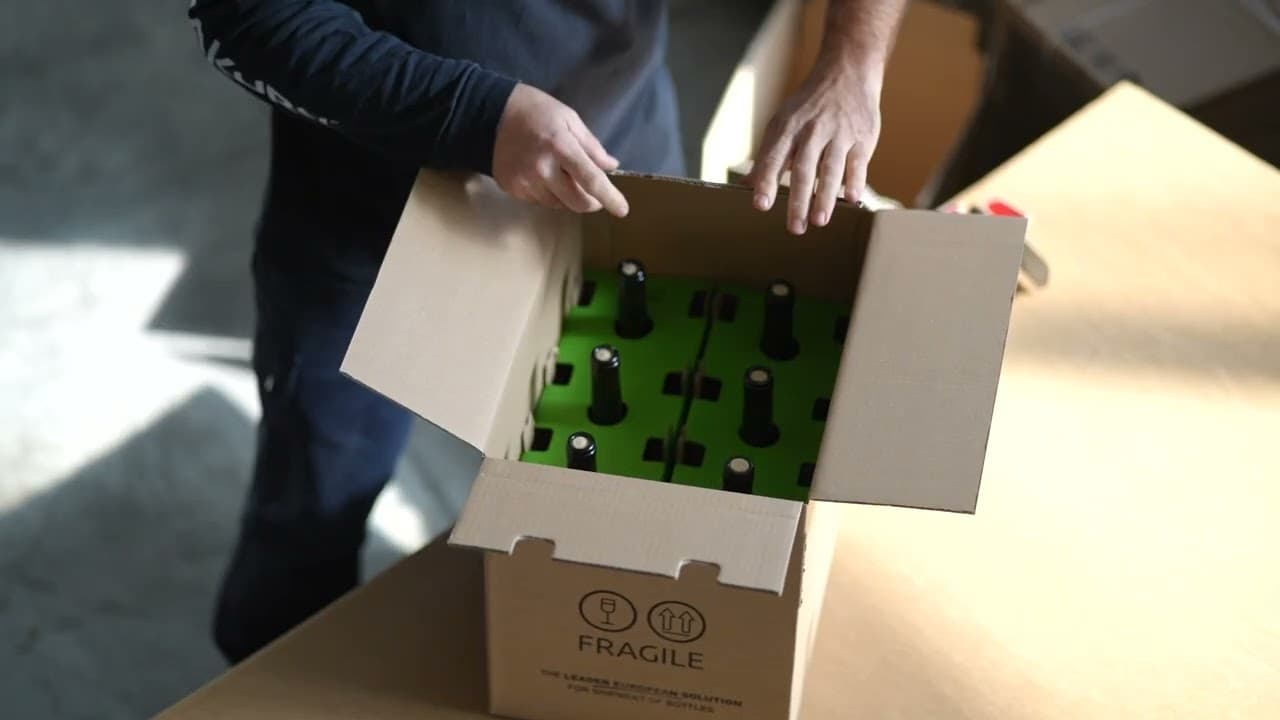
- Quick assembly : The carton assembles in under a minute.
Assembly on video
Factor in temperature
Wine is sensitive to intense heat, cold, and sudden temperature swings, which can affect the wine as well as labels, capsules, and gift boxes. For sensitive shipments, avoid periods of extreme heat or cold, and favour supervised transport for valuable bottles or long journeys.
Common mistakes to avoid
- Using packaging not designed for bottles
- Letting bottles move inside the parcel
- Reusing a weakened carton
- Overlooking transit times during heat, cold, or public holidays
- Assuming a “Fragile” label is enough to protect the shipment